By Stacy F. Kaufeld, M.A.
Previous posts in LASA’s “City Builders” series have focused on individuals and their contributions to the city of Calgary over the last 150 years. The following post – in two parts – will examine the Faculty of Law at the University of Calgary through the recollections of its deans.
Part I reflects on the roles of John McLaren and Ian Holloway and their strong beliefs in the teaching and researching of Canada’s legal history as part of legal education. Part II looks at prominent female faculty, including two deans who went on to careers on the bench.
In Part I reference was made to the changing demographics of law school. This reflects a wider trend in the legal profession itself. One of the major shifts in the demographics is the increasing number of women entering the profession.
Alberta admitted its first female lawyer, Lilian Ruby Clements, in 1915, and Violet King Henry, Canada’s first Black female lawyer, was admitted to the Alberta bar in 1954. According to the Law Society of Alberta, female lawyers made up only one percent of the 355 practicing lawyers in the province in 1957. By 2019, women accounted for forty percent of Alberta lawyers.[1] This shift is also being seen in law schools across Canada where there are more female than male students enrolling in law.
The Honourable Constance Hunt
Before being appointed to the Court of Queen’s Bench in 1991 and Court of Appeal in 1995, Constance Hunt served as dean starting in 1989. Having a law degree from the University of Saskatchewan and a Masters of Law from Harvard, Hunt joined the inaugural faculty and was appointed Associate Dean in 1979. She specialized in environmental and aboriginal law and was the author of Oil and Gas Law in Canada.[2]
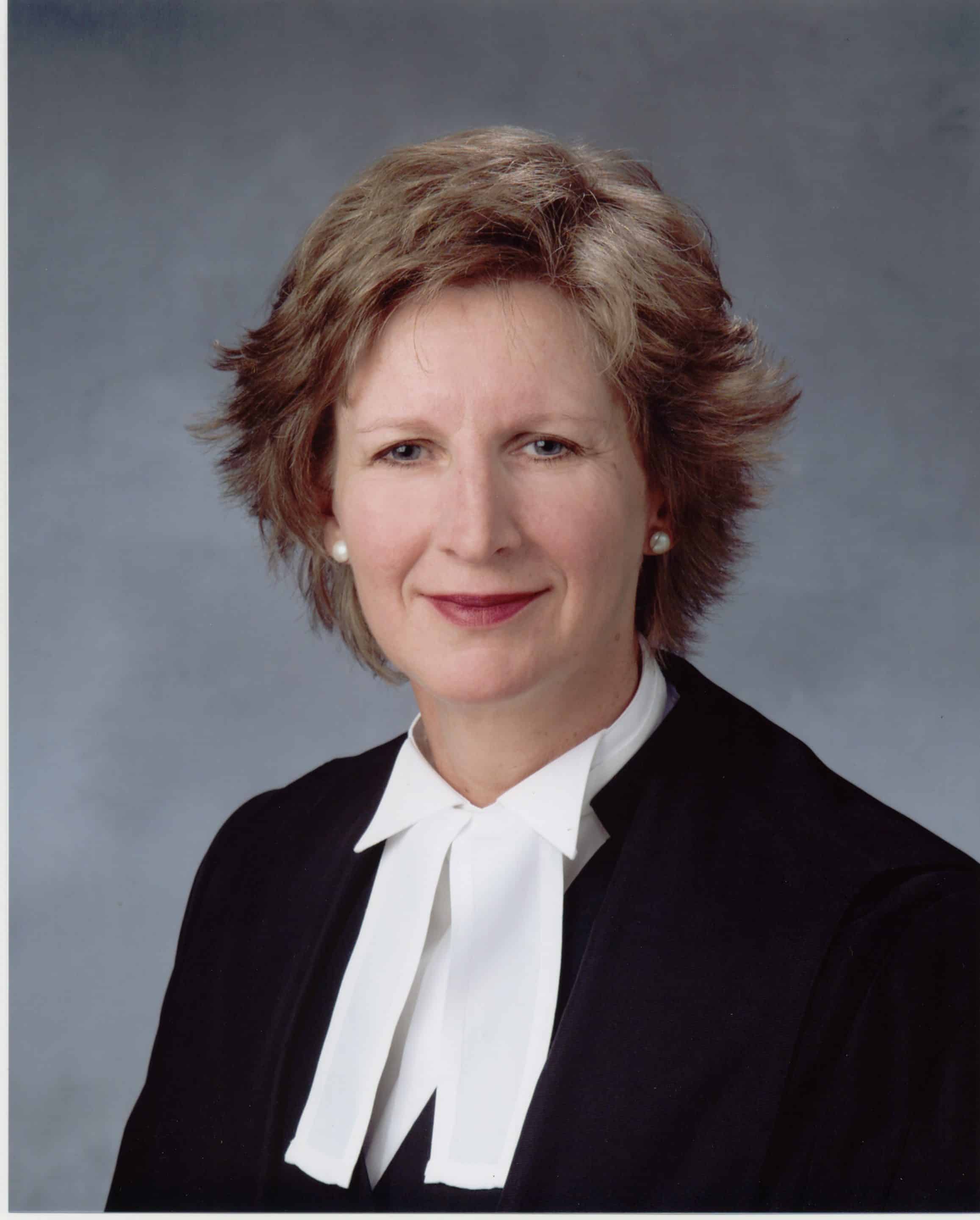

While only dean for two and a half years, there were many accomplishments including the establishment of a masters program in environmental and resources law, the beginnings of a new building – Murray Fraser Hall – for the growing faculty, establishing connections with former alumni to the benefit of current students, expanding the outreach to the large firms in downtown Calgary, and the constant curriculum review.
The law school was growing quickly and Hunt moved toward a more national and international presence. During her tenure, the faculty hired a francophone professor for the chair in Natural Resources Law, introduced more foreign students to the program, and hosted a conference on International Human Rights. The faculty also established law foundation entrance scholarships and introduced a lecture series to honour Energy Minister Merv Leitch, Q.C.
But it was student success that please Hunt the most. In 2007, she recalls, “one of my deepest joys as a judge…has been listening to my former students effectively argue cases before me. And it has been a pleasure to have as judicial colleagues former academic colleagues and faculty graduates who now sit on the provincial court, the Court of Queen’s Bench and the federal court.”[3]
One of those colleagues was two-time graduate, Judith Hanebury, who was appointed a Master in Chambers for the Court of Queen’s Bench in 2005. She was a member of the faculty’s first graduating class in 1979, and in 1991 was the first person to earn a LLM in the established Natural Resources, Energy, and Environmental Law Graduate Program.
In addition, she has taught and lectured on various topics, including judicial independence, in Rwanda and Kenya.
The Honourable Sheilah Martin
Following Constance Hunt as dean was another capable faculty member who also went to the bench. Sheilah Martin was dean during the faculty’s exciting yet difficult period between 1992 and 1996.
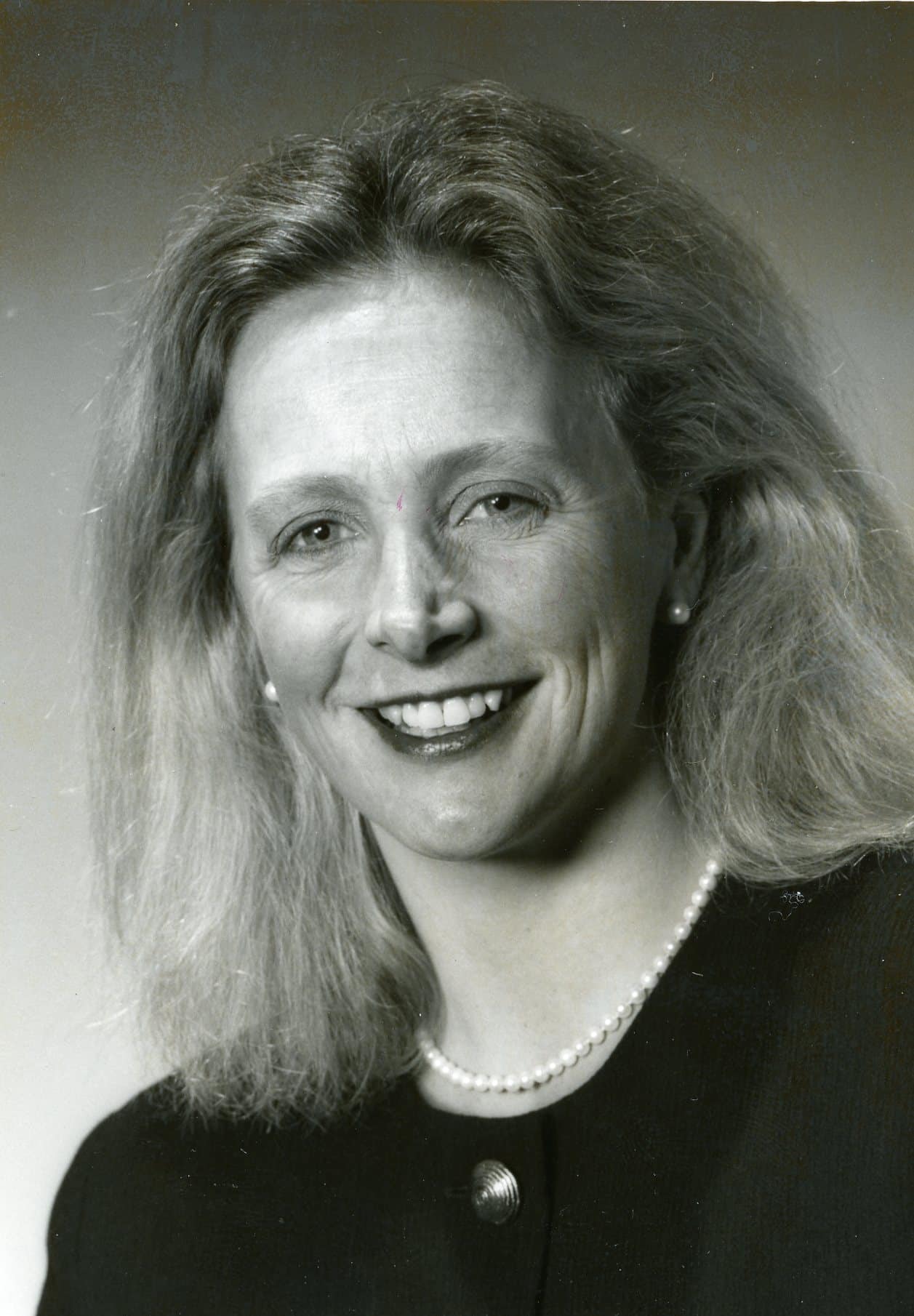
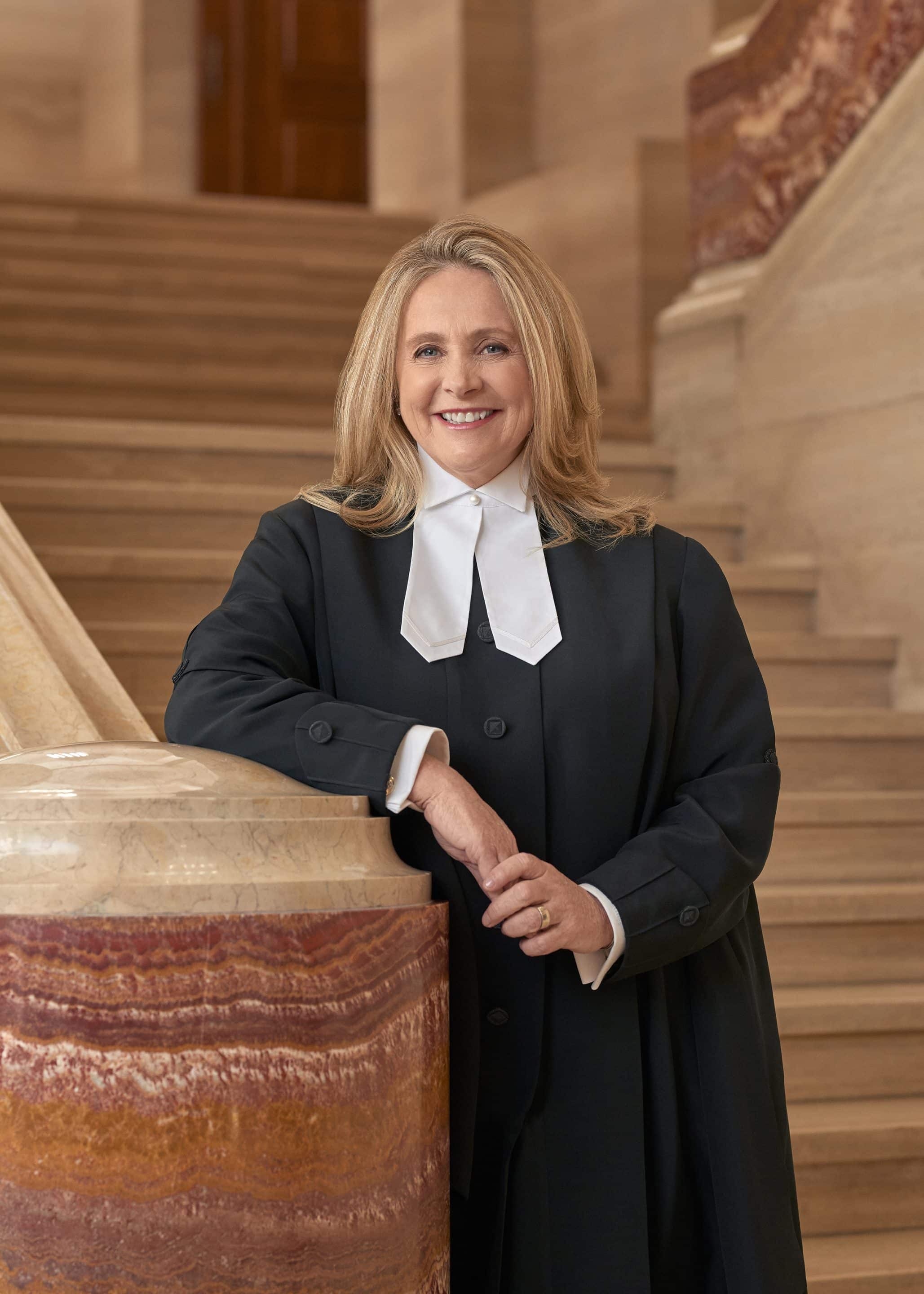
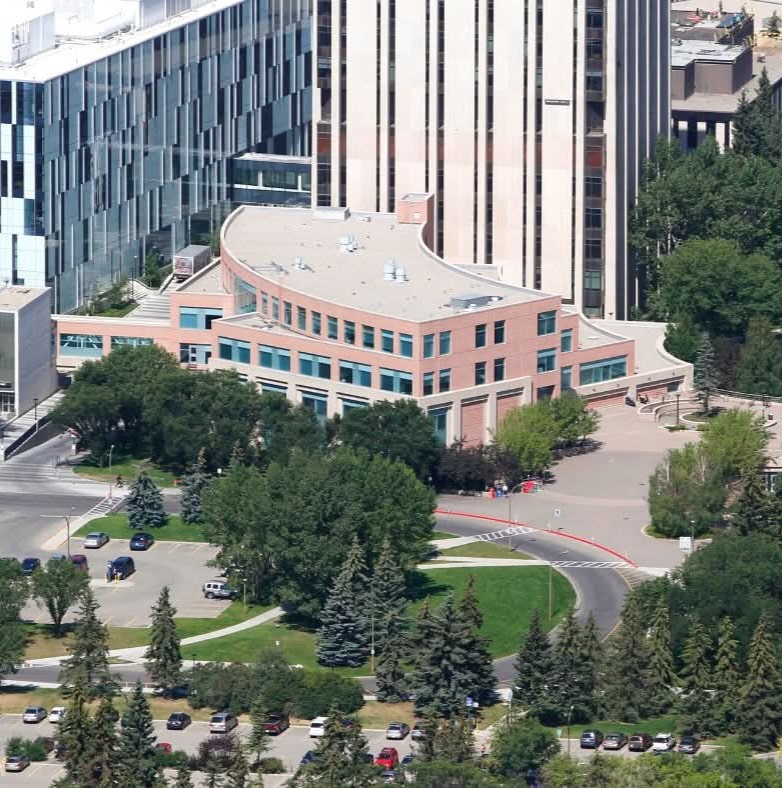
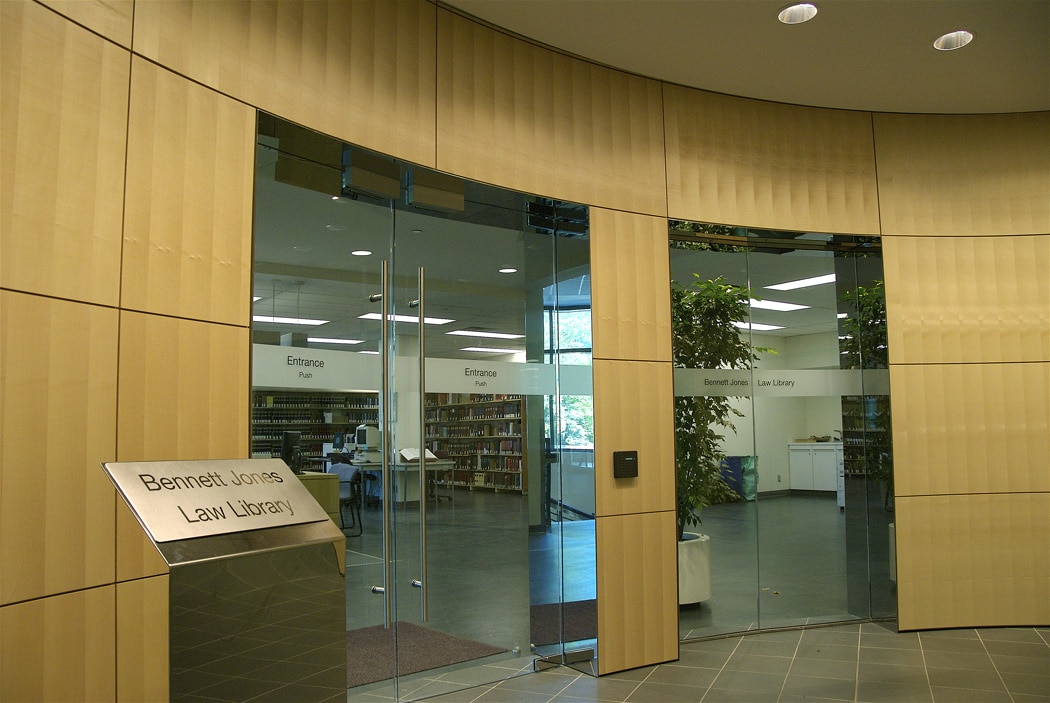
As a faculty member she was on the university building committee that oversaw the planning and construction of Murray Fraser Hall. The facility that was to become the faculty’s new home had specific requirements – a dedicated library, moot courtroom, computers, and large working spaces – necessary to adapt to the skills-based teaching methods used by the faculty.
In 2007, Martin recalls, “when I became dean I learned how to read building plans, and equipped with a hard hat, steel-toed shoes, and clipboard full of suggestions, I felt I was a part of guiding the building from the ground.”[4]
As the needs of students and the legal profession evolved, there was a constant requirement to review and update the curriculum. During Martin’s tenure, several reforms were enacted addressing the teaching of evidence, legal writing, social responsibility, and ethics. In addition, the faculty established a part-time program and introduced a joint LLB and Master of Commerce degree.[5]
The third notable initiative involved an intensified fundraising effort. During this period, financial limitations were evident, particularly due to decreased support from governmental sources. This mainly affected student programs considerably. She pursued alternative funding sources to maintain, for example, students’ mooting record. It was great to see the local profession step up with financial support.[6]
Martin’s time as dean saw notable growth in faculty research and legal scholarship. The law school hosted a national conference on legal ethics, invited international legal scholars to lecture, and encouraged interdisciplinary studies between law and several other fields.[7]
From 1996 until her appointment to the Court of Queen’s Bench in 2005, Martin practiced criminal and constitutional litigation. Following twelve years as a trial judge, she was appointed to the Court of Appeal in 2016. In December 2017, she was appointed to the Supreme Court of Canada.
The Honourable Patricia Rowbotham
Patricia Rowbotham was not a dean at the Faculty of Law. Rather, she was a student graduating in 1981, as well as a part-time faculty member in 1990.
Following her graduation, Rowbotham clerked at the Supreme Court of Canada with Ronald Martland and Bertha Wilson. Called to the Alberta Bar in 1983, she became a litigator at Blake, Cassels & Graydon LLP. A popular professor from 1990 until 1999, she was also widely published in tort law and civil procedure.
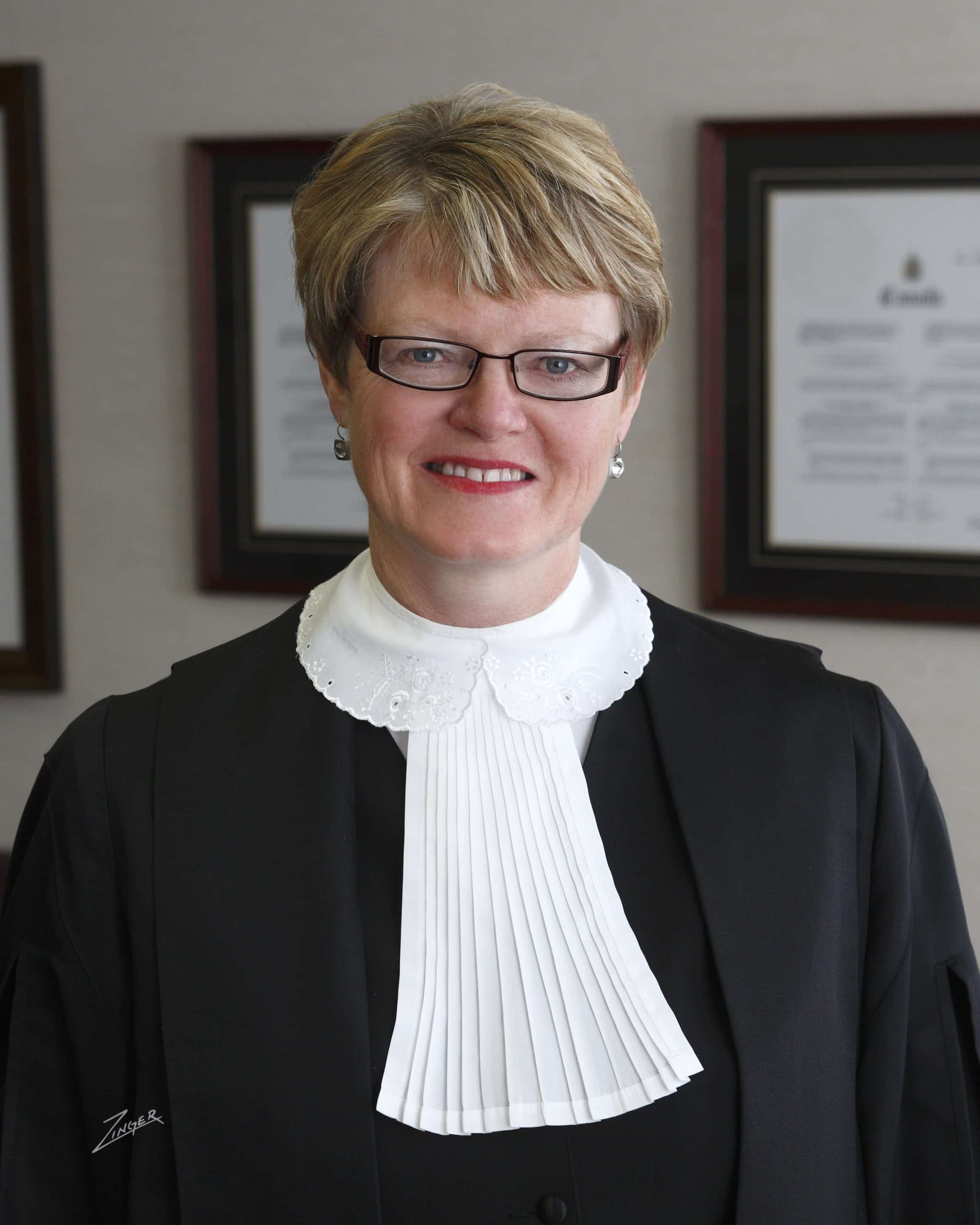
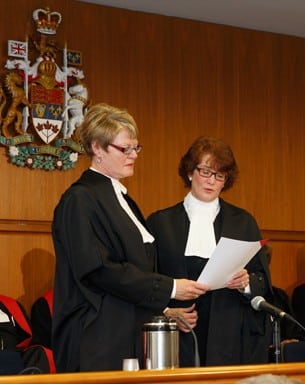
In 1999, Rowbotham was appointed to the Court of Queen’s Bench and remained there until her appointment to the Court of Appeal in 2007. After seventeen years on the court, she retired in September 2024.
As a law faculty graduate, she achieved several milestones, including the first graduate to clerk at the Supreme Court of Canada, the first graduate to return to lecture at the law school, and the first graduate to be appointed to the Court of Queen’s Bench and Court of Appeal.[8] Her career is certainly indicative of the progress seen at the law faculty at the University of Calgary.
In 2026, the Faculty of Law will celebrate its fiftieth anniversary. Since its founding in 1976, it has established itself as a prominent law school in Canada, with both its graduates and faculty going on to practice law or serve as judges. The deans—including those not mentioned here—have played a pivotal role in the faculty’s achievements. Their leadership responsibilities have always focused on delivering a skills-based curriculum, continually reviewing and adjusting it to meet the evolving needs of students and the legal profession.
During the first fifty years, both student numbers and faculty grew, and the institution’s reach extended nationally and internationally. The faculty moved to a permanent location featuring a dedicated law library and moot court facilities, continually adjusting to evolving technology. The coming fifty years promise further developments for the Faculty of Law.
[1] “International Women’s Day 2021 – Choose to Challenge,” March 4, 2021, www.lawsociety.ab.ca/international-womens-day-2021-choose-to-challenge/, access on November 20, 2025.
[2] David Mittelstadt, People Principles Progress: The Alberta Court of Appeal’s First Century 1914- 2014 (Calgary: Legal Archives Society of Alberta, 2014), pg. 334.
[3] Cited in the Deans of the University of Calgary, Faculty of Law, “The Faculty of Law, the University of Calgary,” in Just Works: Lawyers in Alberta, 1907-2007 ed. Michael Payne (Toronto: Irwin Law, 2007), pg. 223.
[4] Ibid., pg. 224.
[5] Ibid., pg. 224.
[6] Ibid., pg. 224.
[7] Ibid., pg. 224.
[8] Mittelstadt, People Principles Progress, pg. 387.